Having a perfect smile is a matter of not just cosmetics, but also crucial in sustaining oral health. Nowadays patients have an opportunity to use either traditional braces or clear aligners which are two orthodontic solutions that are highly effective.
You can use the difference between these options to determine which treatment is the best suited to your clinical needs, lifestyle, and expectations.
Traditional Braces
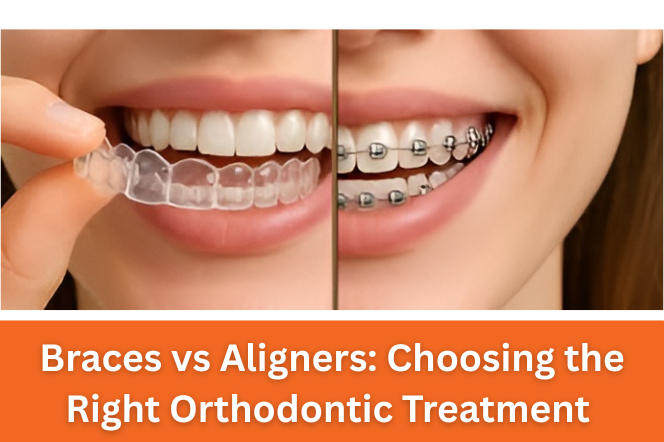
The conventional braces involve the use of a metal or ceramic bracelet bonded to the teeth which are then bound together by archwires that are adjusted on a regular basis by an orthodontist. This is a technique to exert constant pressure on shifting of teeth to the required position.
Key Advantages
- Extremely proficient when dealing with complicated orthodontic treatments, such as extreme crowding and misalignment of the bite.
- Fixed appliance provides the stability in treatment progress without depending on patient adherence.
- Less costly than aligners in general.
Considerations
- Appealing on the teeth and could be aesthetically displeasing.
- Dietary precautions (hard or sticky foods should be avoided) are required.
- The maintenance of oral hygiene is time consuming.
- Short-lasting pain is possible after adjustments.
Clear Aligners
The clear aligners are tooth trays that are tailor-made and transparent trays that fit tightly over your teeth. These teeth are moved with a series of aligners in order to move them over time.
Key Advantages
- Almost transparent, hence suitable among adults and working professionals.
- Would be removable, which would be flexible to eat and take care of the mouth.
- Smooth design is much more comfortable, without the use of wires or brackets.
- Reduction in the number of in-clinic visits.
Considerations
- Strict adherence- aligners need to be put in 20-22 hours a day.
- Not appropriate in some complicated orthodontics cases.
- Usually, the investment is greater than the traditional braces.
Comparison Overview
| Aspect | Braces | Aligners |
|---|---|---|
| Aesthetics | Obvious | Almost invisible |
| Removability | Unchangeable | Removable |
| Appropriateness | Complex cases | Mild to moderate cases |
| Comfort | Moderate | High |
| Maintenance | In service needy | Convenient |
| Patient Compliance | Minimal | Essential |
Making the Right Choice
Braces or aligners should be decided depending on an extensive orthodontic examination.
Braces can be indicated in case you:
- Experience complicated alignment or bite problems.
- Favors fixed and low maintenance solution.
- Need to have a cost-effective treatment option.
Aligners can be appropriate in case you:
- Focus on a low profile and attractive option.
- Is able to wear on a regular basis.
- experience mild to moderate orthodontic issues.
Conclusion
Braces as well as clear aligners have been shown to achieve great outcomes in terms of dental alignment, functionality, and general health of the mouth. The average time taken to treat patients is 12 to 24 months, depending on the severity of the issue.
To ensure maximum results, it is always important to visit an orthodontist with good credentials, and be able to offer a personalised treatment plan that suits your needs.